ਸੰਤ ਬਾਬਾ ਭਾਗ ਸਿੰਘ ਯੂਨੀਵਰਸਿਟੀ
SANT BABA BHAG SINGH UNIVERSITY
Established vide Punjab Govt. Act No. 6 of 2015 and is recognized by UGC under Section 2(F) of UGC Act, 1956. (ISO 9001:2015)
Established vide Punjab Govt. Act No. 6 of 2015 and is recognized by UGC under Section 2(F) of UGC Act, 1956. (ISO 9001:2015)
Date: 12-03-2026
Organizing Unit/Agency: University Institute of Law (UIL)
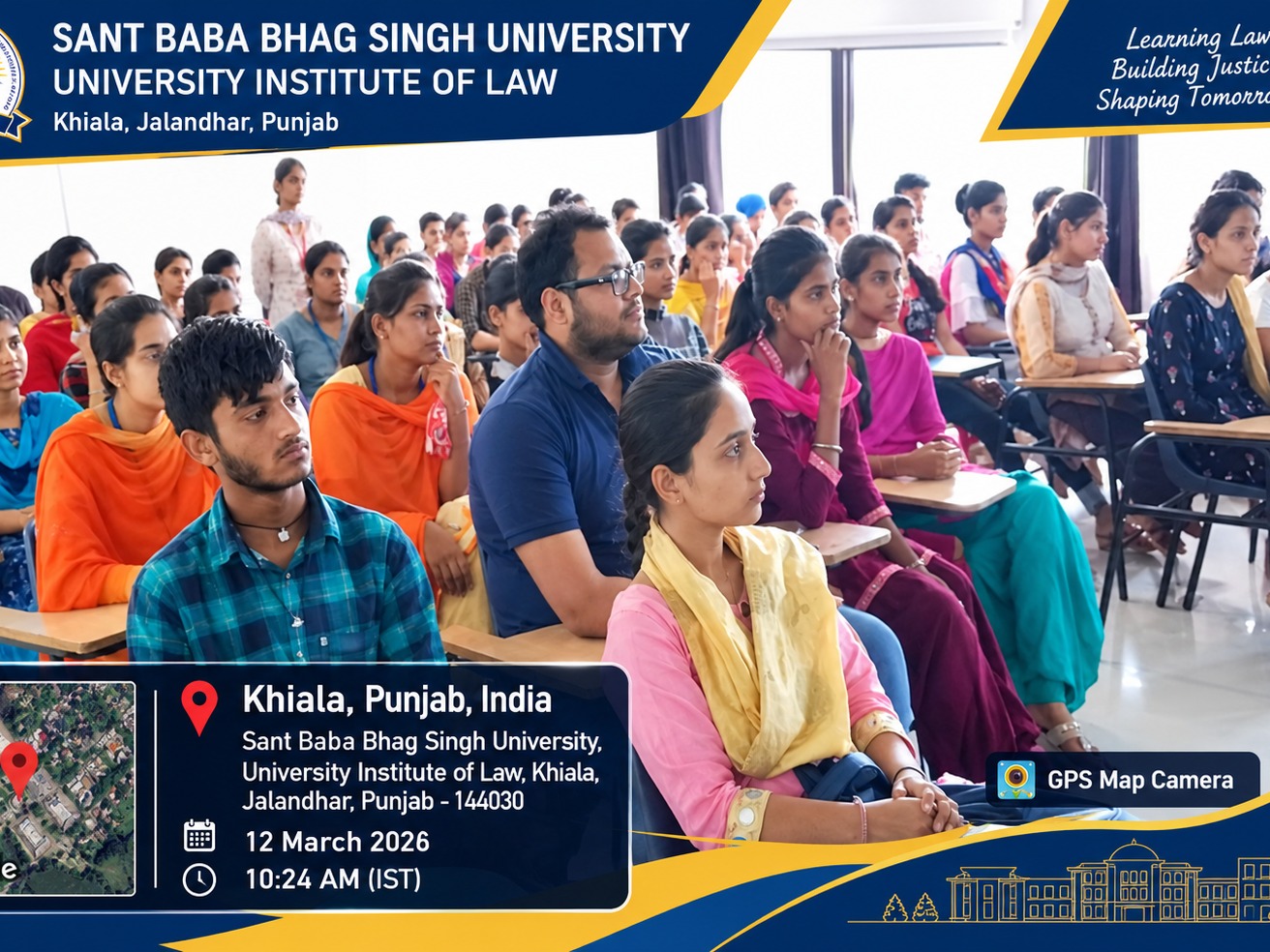
Venue: Moot Court, Block No. 7, University Institute of Law, Sant Baba Bhag Singh University
Under the Aegis of: District Legal Services Authority (DLSA); IQAC, Sant Baba Bhag Singh University
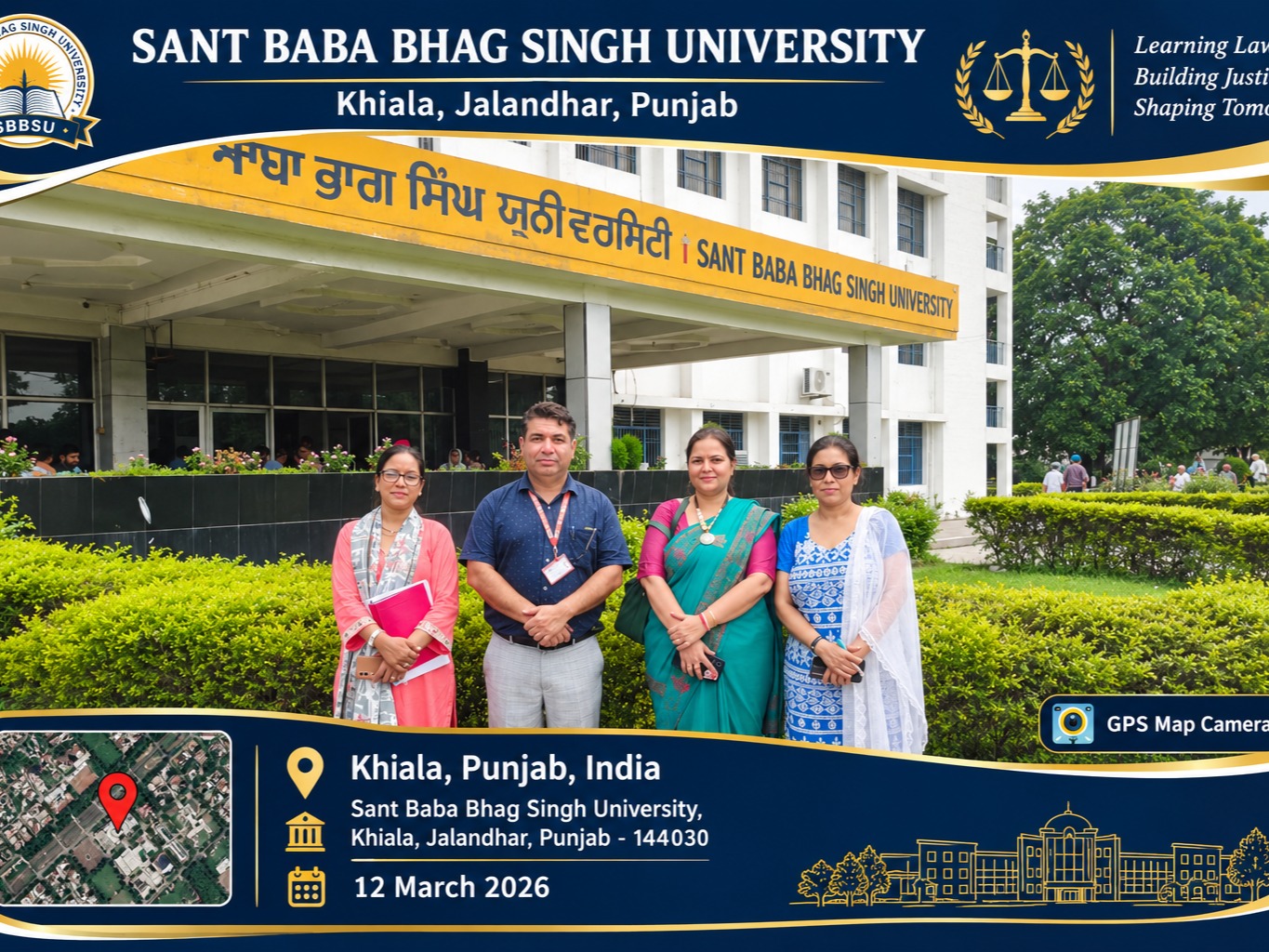
Resource Person: Dr. Shobha Gulati
Convenor: Dr. Pooja Bali, Dean, University Institute of Law
Number of participants: 60 Students and 8 Faculty Members
Event Report
Background
With the increasing burden of pending cases on the formal judicial system, Alternative Dispute Resolution (ADR) mechanisms such as arbitration, mediation, conciliation, and negotiation have emerged as effective, time-saving, and cost-effective means of resolving disputes. Recognising the importance of sensitising law students and faculty members to these mechanisms, the University Institute of Law (UIL), Sant Baba Bhag Singh University, organised an Awareness Programme on Alternative Dispute Resolution System (ADRS), Mediation and Conciliation on 12 March 2026 in the Moot Court, Block No. 7. The programme was organised under the aegis of the District Legal Services Authority (DLSA) and the Internal Quality Assurance Cell (IQAC) of the University.
Objectives of the Programme
Proceedings
The programme commenced with the welcome address by Dr. Pooja Bali, Dean and Convenor, University Institute of Law, who introduced the resource person and outlined the objectives of the session. She emphasised the growing relevance of ADR mechanisms in reducing pendency of cases in courts and encouraged students to view mediation and conciliation as viable career avenues.
The keynote session was delivered by Dr. Shobha Gulati, who elaborated on the concept and scope of Alternative Dispute Resolution, tracing its evolution and statutory backing under Section 89 of the Code of Civil Procedure, 1908, the Arbitration and Conciliation Act, 1996, and the Mediation Act, 2023. She distinguished between the various modes of ADR — arbitration, mediation, conciliation, negotiation, and Lok Adalats — and explained their respective procedures, advantages, and areas of application.
The resource person specifically dwelt upon the process of mediation, explaining the role of the mediator as a neutral facilitator, the principles of voluntariness and confidentiality, and the stages involved in a mediation proceeding. She further discussed conciliation as a distinct process, highlighting the active role of the conciliator in suggesting terms of settlement, and clarified the practical differences between mediation and conciliation through illustrative case scenarios.
The session also covered the benefits of ADR over traditional litigation, such as reduced costs, faster resolution, flexibility of procedure, preservation of relationships between parties, and confidentiality of proceedings. The resource person shared practical insights and real-life examples from her professional experience to help students relate theoretical concepts with practical application.
The session concluded with an interactive question-and-answer round, during which students actively sought clarification on the career prospects in ADR practice, the role of law schools in promoting mediation, and the enforceability of settlement agreements. The resource person responded to the queries in detail, encouraging students to pursue certificate courses and internships in the field of ADR.
Vote of Thanks
The programme concluded with a formal vote of thanks proposed by Dr. Pooja Bali, Dean and Convenor, University Institute of Law, who extended her gratitude to Dr. Shobha Gulati for sharing her expertise and to the District Legal Services Authority and IQAC for their support in organising the event. She also thanked the faculty members and students for their active participation and cooperation in making the programme a success.
Outcome
Participation
The programme was attended by 60 students and 8 faculty members of the University Institute of Law, who participated enthusiastically throughout the session.